
















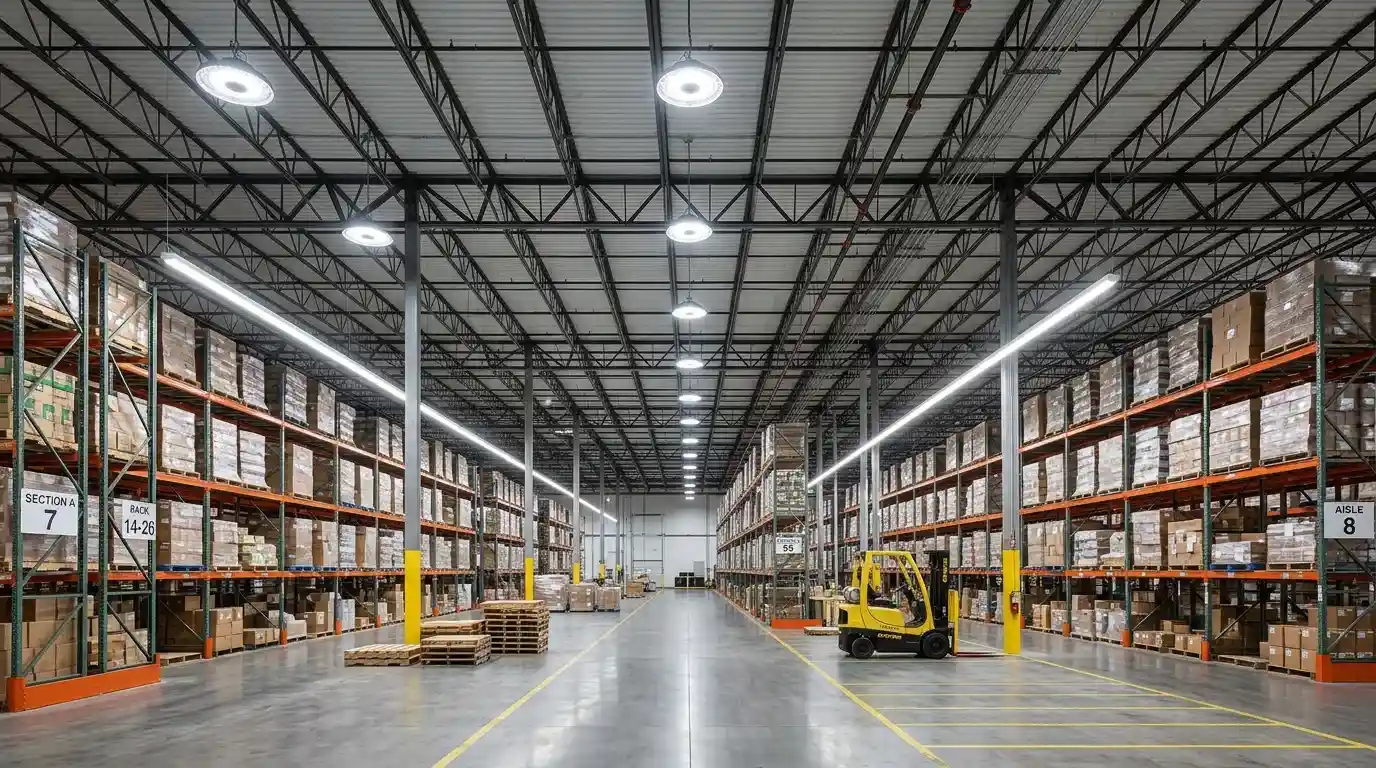
Good warehouse lighting is not simply about installing the brightest fixtures available. The right system needs to provide clear, consistent visibility across aisles, storage racks, loading areas, workstations, and open floor space without wasting energy or creating uncomfortable glare.
For most facilities, LED Warehouse Lighting is the practical choice because it combines high light output with efficient operation, long service life, and compatibility with modern lighting controls. The more important question is which type of LED warehouse light fits the space.
Ceiling height, rack configuration, aisle width, required brightness, fixture spacing, and daily activity all affect that decision. A large open distribution center may need a completely different lighting layout from a warehouse filled with narrow rows of tall shelving.
Several types of Commercial LED Warehouse lighting are available, but high bays, low bays, vapor-tight fixtures, and task lighting cover most warehouse applications.
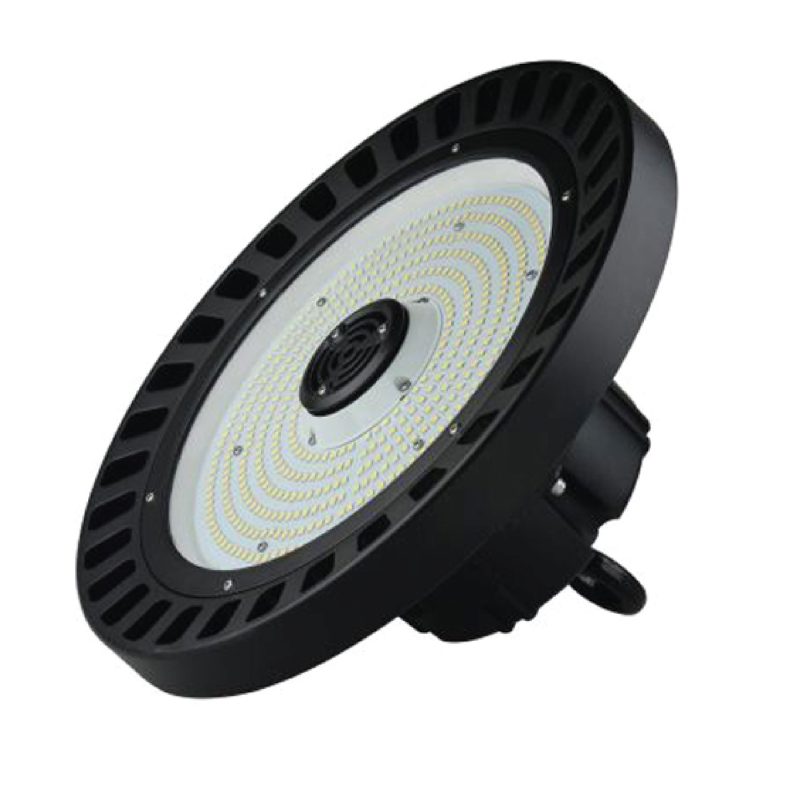
UFO high bay lights are compact, round fixtures designed to produce a strong downward light pattern from higher mounting positions. They are commonly used in warehouses with large open areas where broad, consistent floor coverage is needed.
Their compact design also makes installation relatively straightforward where individual mounting points are already available.
UFO high bays are particularly useful over open storage areas, receiving zones, manufacturing floors, and other large spaces without continuous shelving. They can also be paired with different optics depending on mounting height and required coverage.
For buyers comparing the best LED high bay lights for warehouse applications, the important specifications are not wattage alone. Lumen output, beam angle, efficacy, mounting height, and fixture spacing should all be reviewed together.
Recent warehouse-lighting guidance similarly distinguishes UFO fixtures as a strong option for open floor plans while recommending linear fixtures for more structured aisle layouts.
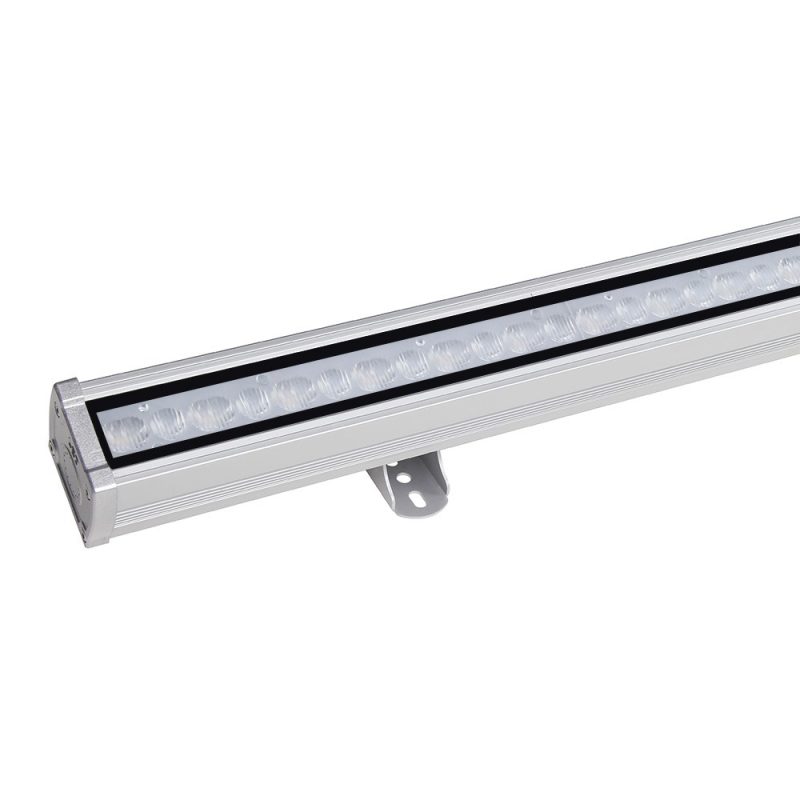
Linear high bay lights are often the better choice for warehouses built around long aisles and storage racks.
Instead of distributing light in a primarily circular pattern, their rectangular form can direct illumination along a longer area. This makes linear high bay lights for warehouse aisles useful where visibility is needed on the floor as well as around racks, labels, products, and picking locations.
Distribution centers, fulfillment facilities, large storage buildings, and warehouse-style retail spaces frequently benefit from this type of layout.
The choice between UFO vs linear high bay lights therefore depends less on which fixture is considered “better” and more on where the fixture is being installed. Open spaces usually favor broader distribution, while long rack aisles benefit from a light pattern that follows the aisle.
Not every warehouse has a high ceiling. Low bay warehouse lighting is designed for areas where high-output high bays could create excessive brightness or uneven illumination.
LED low bay lights can work well in smaller storage buildings, workshops, packing areas, staging zones, and sections of a warehouse with lower mounting heights.
The goal is to provide enough usable light at the working level without overpowering the space. This is why ceiling height should be considered before selecting wattage or lumen output.
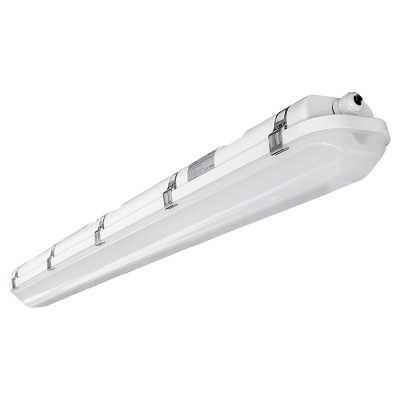
Some warehouse environments expose lighting fixtures to dust, moisture, debris, or frequent cleaning. In these areas, vapor-tight warehouse lighting may be more appropriate than a standard open fixture.
Sealed vapor-tight LED fixtures can be useful in cold storage areas, food-handling environments, utility rooms, covered loading areas, and other demanding industrial spaces.
Always check the actual IP rating and environmental specifications of a fixture rather than assuming every industrial LED light provides the same level of protection.
High bay lighting is responsible for the overall illumination but may require supplementary lighting for particular working zones. The packing stations, inspection tables, workstations, shelves, maintenance zones, and order picking locations can have individual strips or task lights installed. It would be more efficient to introduce localized lighting than raising the brightness of the overhead lights.
The best commercial LED lighting for warehouses should be selected around the building rather than around a single product specification.
Mounting height has a major influence on fixture output and beam selection.
Lower mounting positions generally need less concentrated output, while warehouse lights for high ceilings need enough intensity to deliver useful illumination at floor level.
Someone planning warehouse lighting for 20-foot ceilings will not necessarily need the same fixture configuration as a facility with 30- or 40-foot ceilings. Ceiling height should therefore be considered alongside lumens, optics, spacing, and the activities taking place below.
Avoid selecting fixtures solely because they have a higher wattage rating. Modern LED performance is better evaluated through actual lumen output and luminous efficacy. The U.S. Department of Energy also uses lumens per watt when evaluating energy-efficient commercial and industrial LED luminaires.
Warehouse planning and design is equally important to warehouse height.
Large open spaces will usually need general lighting, whereas narrow aisles will need focused lighting. The packing and inspection area will need brighter task lighting, but not the bulk storage space.
A warehouse lighting layout should also account for racks that can block light and create shadows. This is why copying the same fixture spacing across every part of a building does not always produce a good result.
For larger or more complex projects, a photometric layout can help determine fixture quantity, placement, light levels, and uniformity before installation.
There is no single warehouse lumen requirement that works for every facility.
The required output depends on floor area, ceiling height, fixture count, beam distribution, spacing, surface reflectance, and the work being performed.
An area used primarily for pallet storage may have different requirements from a picking, packing, assembly, or inspection zone.
Instead of asking only “how many lumens for warehouse lighting?”, consider how those lumens will reach the working surface. More output does not automatically mean better visibility. Poor spacing can create bright spots directly below fixtures and darker areas between them.
The objective should be useful, uniform illumination rather than the highest lumen number available.
Two common options for commercial warehouse lighting are 4000K and 5000K.
4000K warehouse lighting provides a neutral white appearance that works well in many general storage, production, and work areas. It offers clear visibility without producing an extremely cool appearance.
5000K warehouse lighting has a cooler daylight-like appearance and is often chosen for environments where a crisp, bright visual environment is preferred.
When comparing 4000K vs 5000K warehouse lighting, there is no universal winner. Consider the type of work, existing fixtures, employee comfort, surrounding finishes, and consistency across the building.
When evaluating commercial lighting fixtures, do not consider only their wattage and color temperature.
There are other important considerations such as lumen efficacy, dimming capabilities, optical options, operating temperature, environment ratings, mounting possibilities, and certifications.
Lighting controls can also make a significant difference in warehouses where certain aisles or storage areas remain unoccupied for long periods. Motion or occupancy sensors can reduce unnecessary operating time, while 0-10V dimmable warehouse lights allow output to be adjusted when full brightness is not required.
The Department of Energy notes that commercial and industrial LED luminaires can work with strategies including occupancy sensing, task tuning, and dimming.
Many warehouses ultimately use more than one fixture type. A mixed lighting design can provide better results than forcing a single high bay model into every part of the building.
An LED warehouse lighting retrofit can improve more than energy consumption.
Modern fixtures can provide more controlled light distribution, easier dimming, sensor integration, reduced maintenance demands, and quicker start-up than many older HID lighting systems.
Upgrading also creates an opportunity to correct existing problems such as poor warehouse light spacing, shadowed aisles, excessive glare, or fixtures that no longer match the way the building is used.
For that reason, replacing old fixtures one-for-one is not always the best approach. Review the existing warehouse lighting layout before deciding how many new fixtures are actually needed.
The best LED warehouse lights are the ones that match the space they are expected to illuminate.
UFO high bays are a practical choice for many open warehouse areas, while linear high bays are well suited to aisles and rack layouts. Low bays make sense at lower mounting heights, vapor-tight fixtures serve more demanding environments, and task lighting can improve visibility at individual workstations.
Before choosing a commercial warehouse lighting system, review ceiling height, lumen requirements, beam angle, fixture spacing, color temperature, controls, and the type of work performed in each area.
That approach produces a more useful lighting system than choosing fixtures based on wattage, price, or brightness alone.


 DOUBLE RING FLUSH MOUNT
 DOWNLIGHTS & RETROFITS
 EMERGENCY LIGHTS
 PANEL LIGHTS
 UFO HIGH BAYS
 LINEAR HIGH BAYS
 LED EXHAUST FAN
 LIGHT BULBS
 VANITY LIGHTS
 HAZARDOUS LIGHTING
 TUBE LIGHTS
 INTEGRATED FIXTURES
 RETROFIT BULBS
 CANOPY LIGHTS
 CORN BULBS
 FLOOD LIGHTS
 GAS PRICE SIGNS
 POST TOP LIGHT
 SHOEBOX LIGHTS
 WALL PACKS
 VAPOR PROOF
 LED MODULES
 LED WALL WASHER LIGHTS
 LED UNDERGROUND LIGHTS
 LED POOL LIGHTS
 DRIVERS / POWER SUPPLY
 CONTROLLERS
 WIRING ACCESSORIES
 LIGHT POLES
 SUSPENDED PENDANT LIGHTS
 CONTEMPORARY CHANDELIERS