

















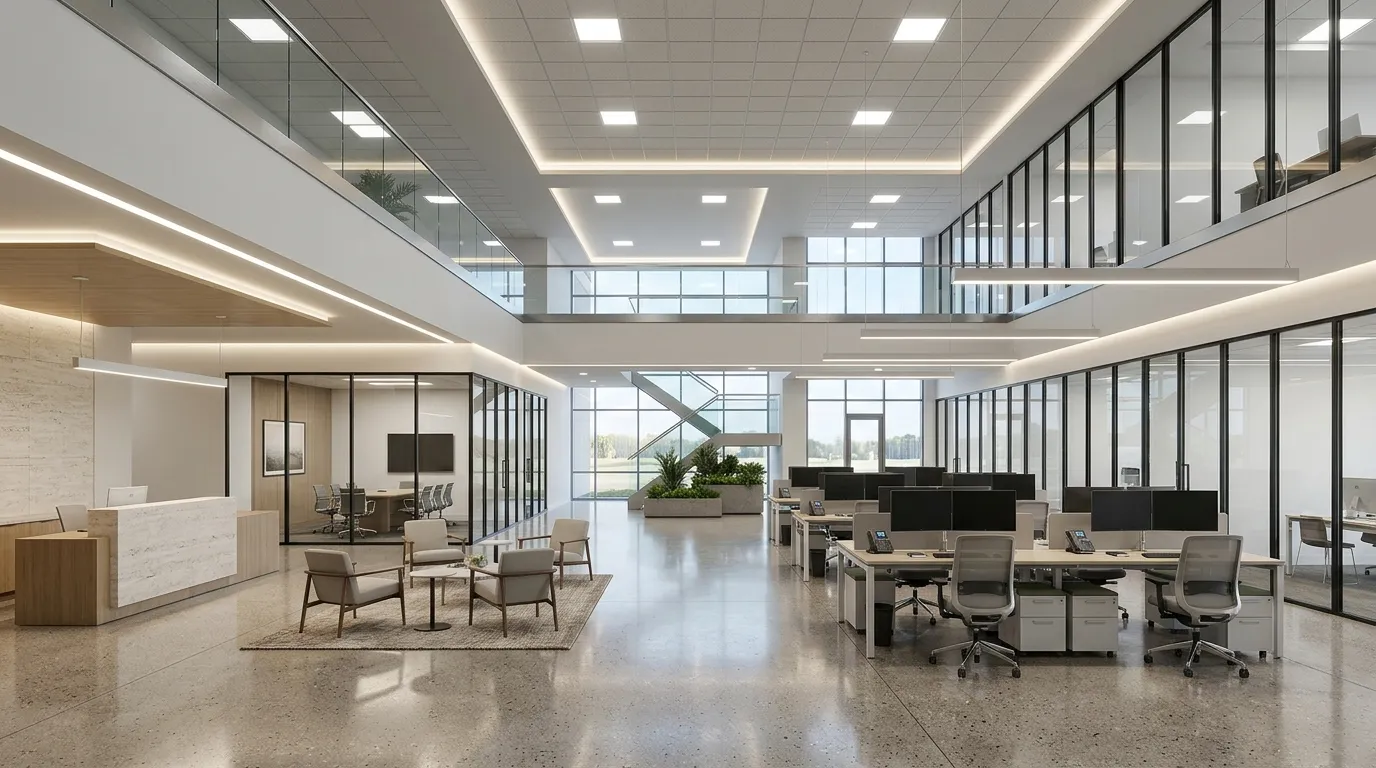
Lighting is an area of building operations that often gets very little thought until it stops being an overlooked expense and starts being a headache. Old lighting can lead to unnecessary costs, regular maintenance, and uncomfortable indoor settings. The solution to the old lighting headache is installing modern LED commercial lighting. LED lighting are much more energy efficient than most systems that are already installed in buildings now. They also have a long life span.
When you begin the upgrading process there is a lot more to it than replacing old bulbs. You have to take into consideration the cost of installation, the quality of the fixtures, and how you choose to position the lighting fixtures throughout your building. The long-term costs of your decision to upgrade should also be taken into consideration. This guide will walk you through what you need to consider before making an LED lighting investment for your facility whether you manage a warehouse, retail, or commercial building.
Commercial building LED Lighting refers to lighting systems designed for business properties using light emitting diode technology.
Unlike traditional incandescent, fluorescent, or metal halide lighting, LED fixtures produce light through semiconductor components. This technology allows modern fixtures to deliver useful illumination while consuming relatively little electricity.
Commercial applications include offices, shopping centers, warehouses, hospitals, educational facilities, and industrial buildings.
Different buildings require different lighting solutions. An office may need comfortable, evenly distributed ceiling lighting, while a warehouse requires powerful fixtures capable of illuminating large floor areas.
The goal is to select lighting that supports building activities without wasting electricity or creating unnecessary maintenance expenses.
Switching to LED technology can improve several aspects of building operations. While energy savings often attract the most attention, the benefits extend beyond electricity consumption.
Energy efficiency is one of the strongest reasons to consider LED lighting.
Older lighting technologies often consume considerably more power to produce comparable illumination. Replacing inefficient fixtures with properly selected LEDs can reduce the electricity required to light a commercial property.
According to guidance from the U.S. Department of Energy, efficient LED systems can reduce lighting energy costs and offer longer operating lives than many conventional alternatives.
The actual savings depend on the existing equipment, replacement specifications, and operating schedule.
Maintenance becomes costly if a property has several fixtures to maintain.
The installation of lights in high-ceilinged buildings, stairwells, warehouses, or outdoors may necessitate specialized tools and extra effort.
Quality LED fixtures generally operate longer than many conventional lighting products. This can reduce the frequency of lamp replacements and the inconvenience of maintaining hard to reach installations.
A commercial property can gain significantly from reduced maintenance disruption if it operates on a round-the-clock basis.
Good lighting helps people use commercial spaces comfortably and effectively.
Poorly positioned or outdated fixtures may create dark areas, excessive glare, or uneven illumination. These problems can affect visibility in offices, storage areas, corridors, and workspaces.
Modern building LED fixtures are available with different optical designs, beam angles, color temperatures, and brightness levels.
Selecting the right combination of lights leads to better light distribution and glorious look of the property.
LED systems can work with occupancy sensors, dimmers, daylight sensors, and programmable controls.
These technologies allow businesses to adjust lighting according to actual building usage.
For example, lighting in an empty conference room can automatically switch off, while fixtures near windows can dim when sufficient natural light enters the building.
These aspects enable reduction of energy consumed and costs involved in lighting when the system is well-installed and configured.
Reducing electricity consumption can help commercial property owners lower the environmental impact associated with building operations.
LED lighting can also reduce the number of replacement lamps required over time.
For businesses working toward energy efficiency or sustainability objectives, a lighting upgrade can be a practical part of a broader building improvement strategy.
It is important to select the right type of light since the amount of illumination needed may greatly differ in different sections of the building.
LED panels are commonly used in offices, conference rooms, reception areas, and professional interiors.
Their slim design and even light distribution make them suitable for suspended ceilings and modern commercial spaces.
LED troffers fit into ceiling grid systems and provide general illumination for offices, schools, healthcare facilities, and similar environments.
They are popular replacements for traditional fluorescent ceiling fixtures.
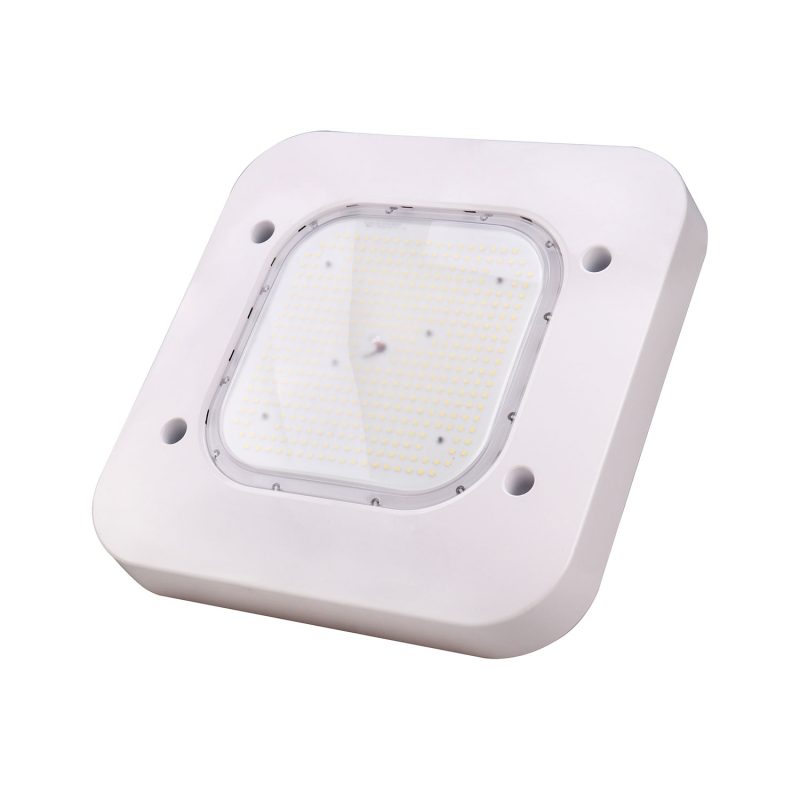
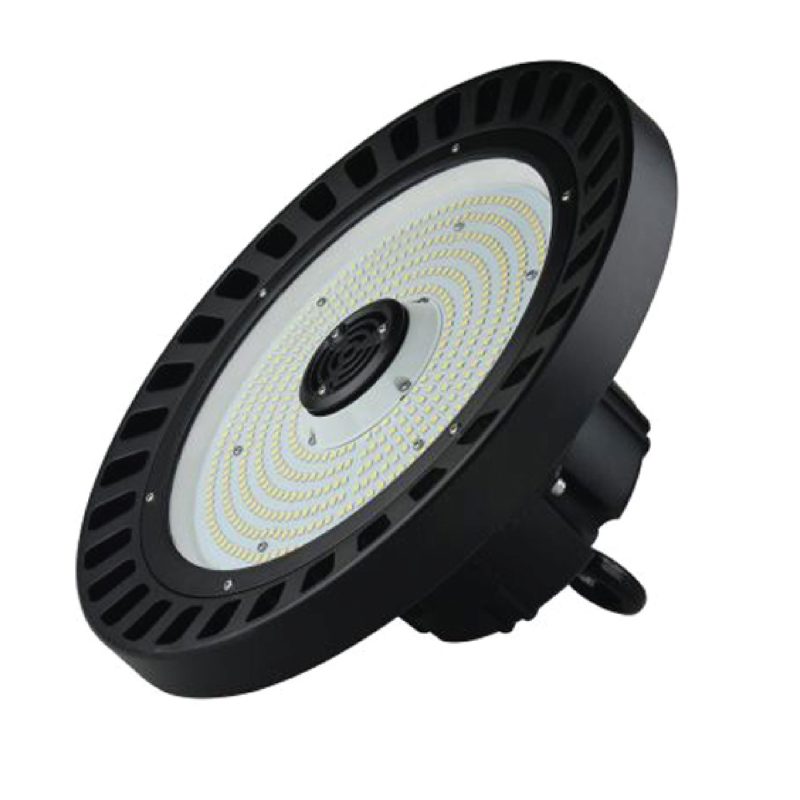
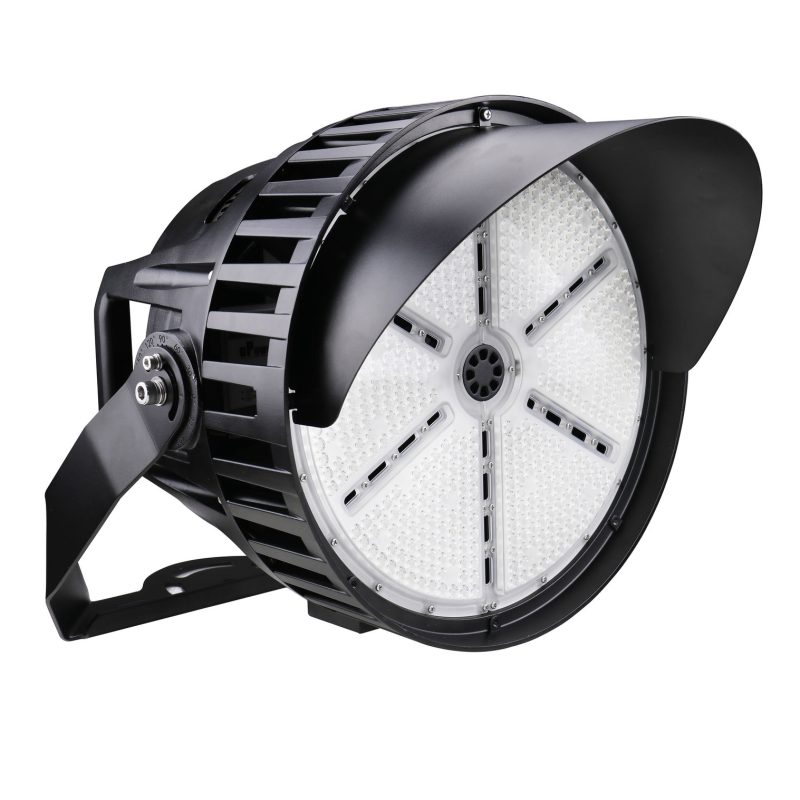
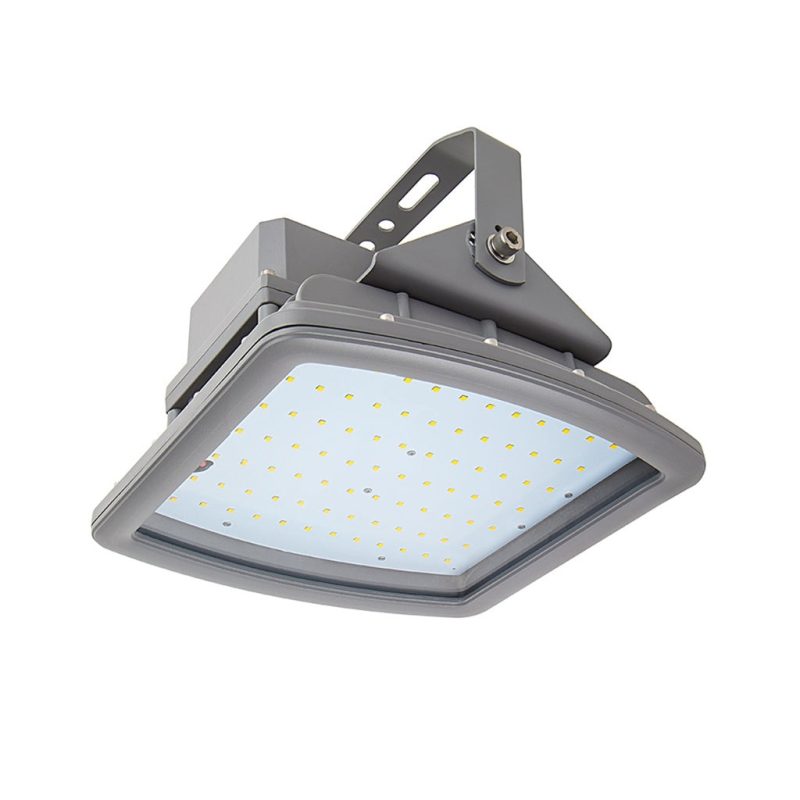
High bay LED lights provide the right kind of lighting for warehouses, large workshops, and commercial environments, particularly where fixtures have to be suspended or ceiling mounted. These fixtures cover a broad area, such as a large production environment, and an area used to store materials. A high bay light should have a higher wattage if it is going to be mounted higher in the room. The fixture beam pattern should be adjusted for the space as well.
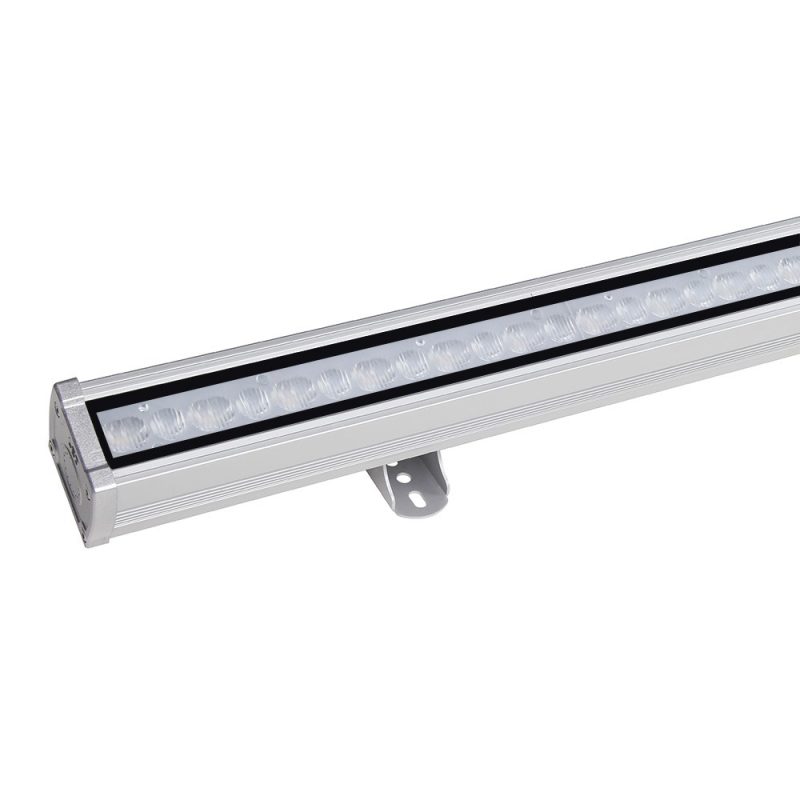
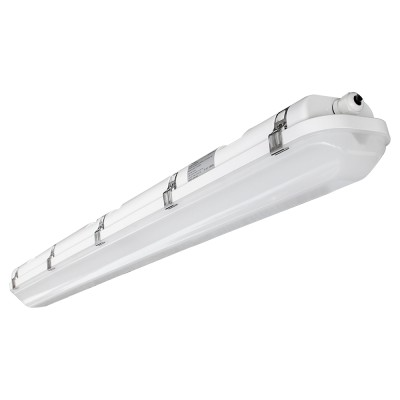
LED linear lights can be used in corridors, display purposes in retail shops, commercial interior spaces, and some industrial purposes.
They are very flexible and enable the creation of continuous lighting schemes in bigger spaces.
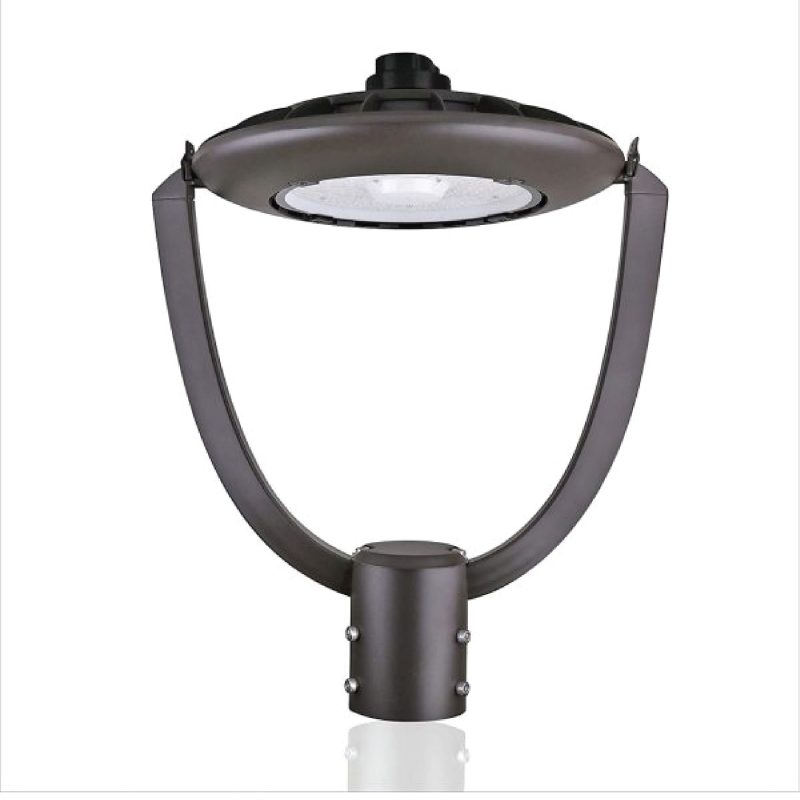
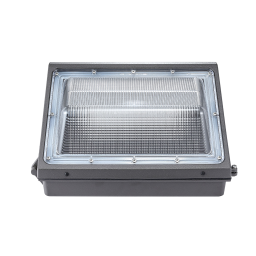
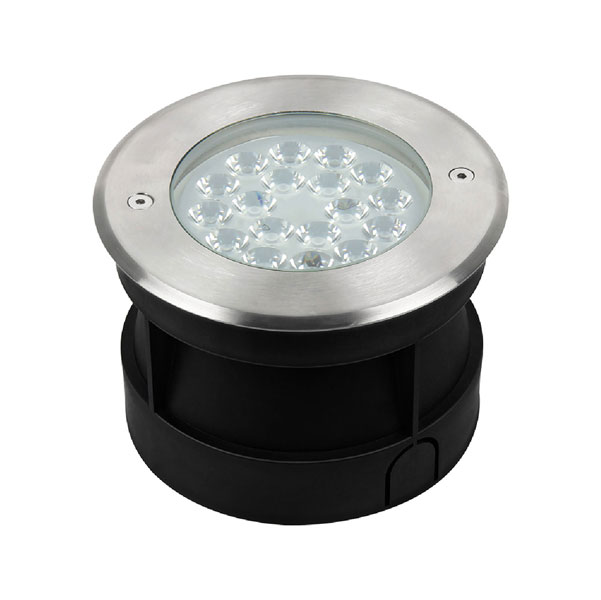
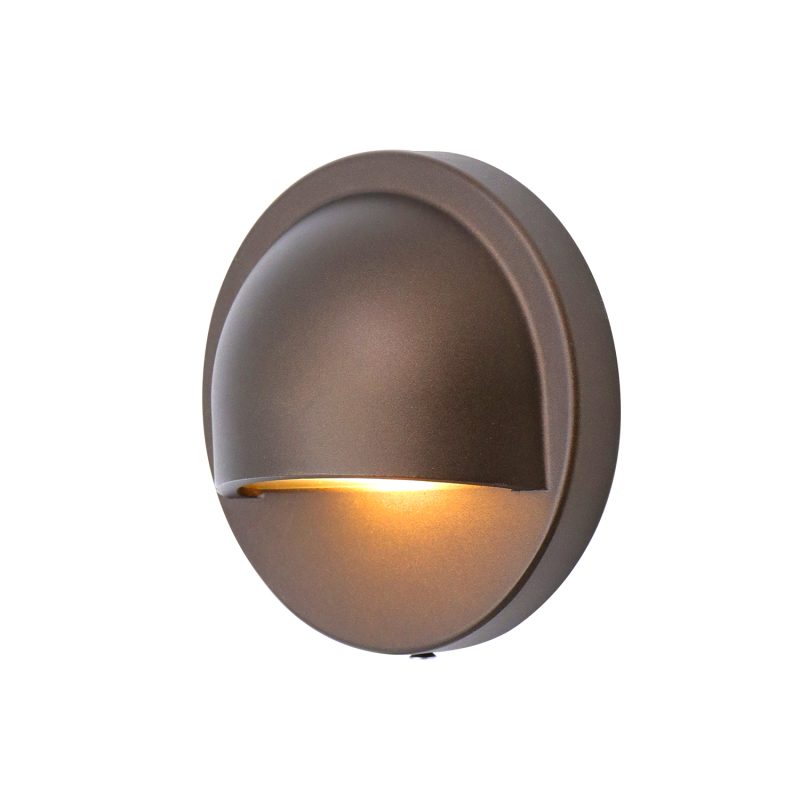
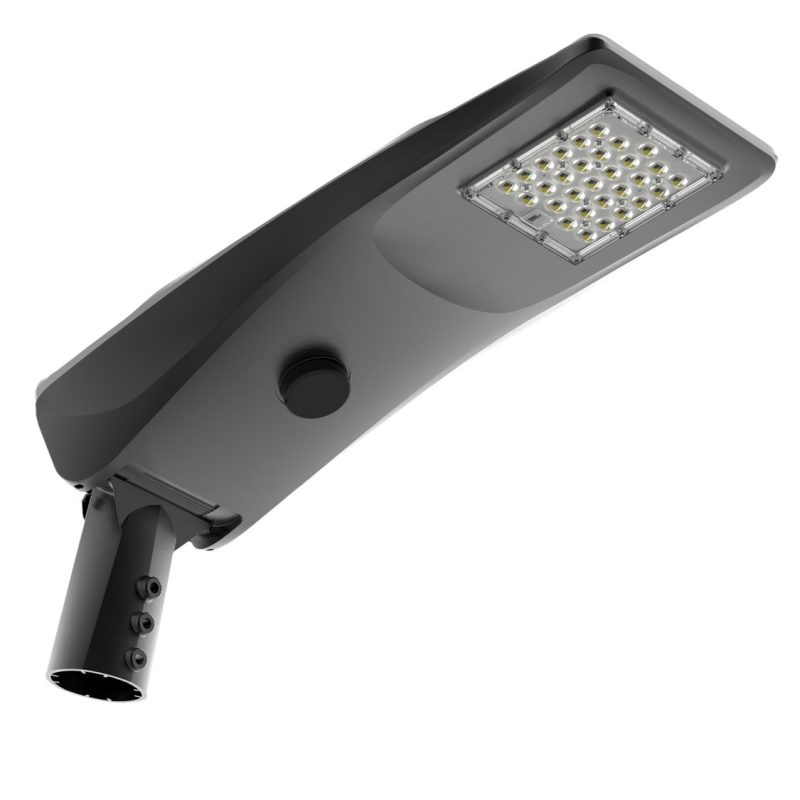
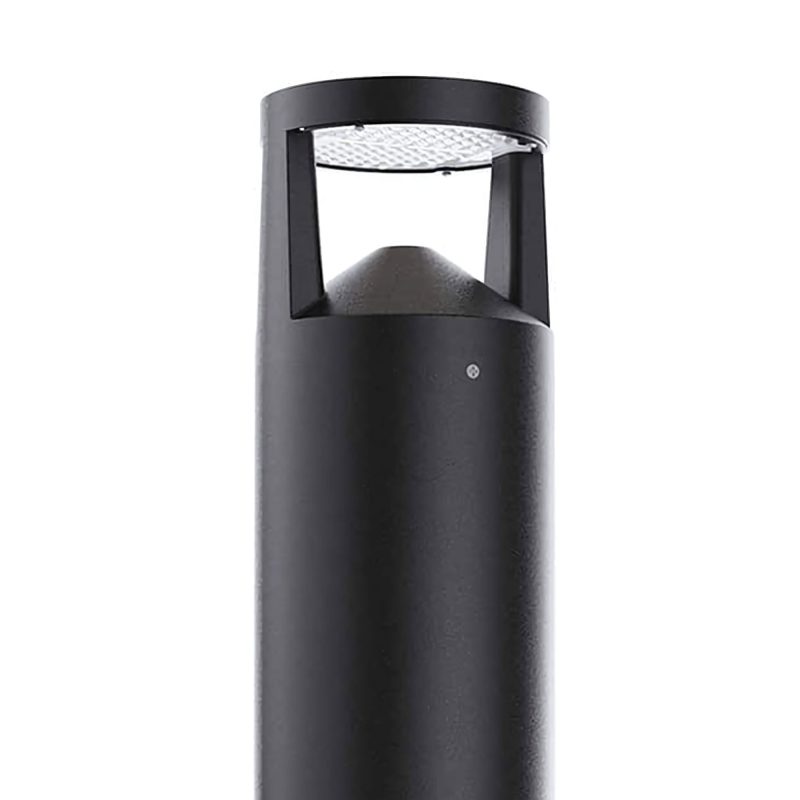
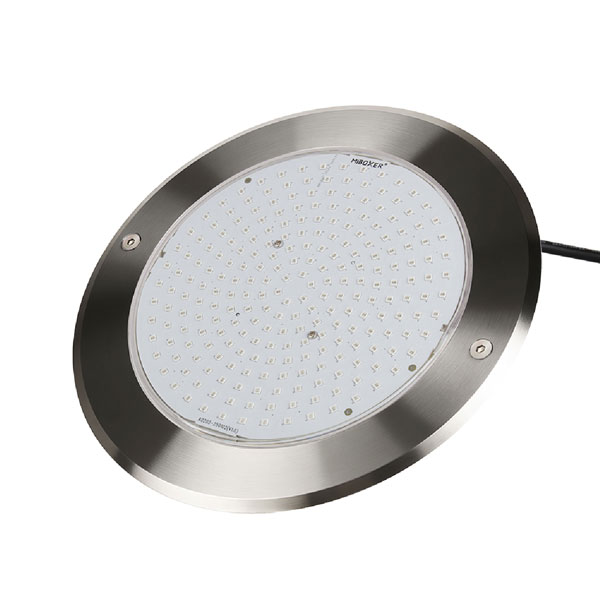
Outdoor commercial spaces need reliable lighting at entrances, parking spots, loading docks, and the environment of buildings.
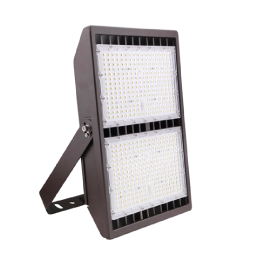
LED floodlights can have various beam types and weather ratings depending on such outdoor applications.
The price you pay for upgrading your lighting will depend on several factors such as the size of the building, type of fixtures and electrical system.
A small office renovation will generally have different requirements from a large warehouse or industrial property.
Understanding the main expenses can help owners establish a realistic budget.
The prices of LED light fixtures are determined by their design, lumen output, efficiency, construction quality, and other features. A simple indoor LED fixture may cost less than a specialized industrial light. Keep in mind that high cost does not automatically equal high performance. Be sure to check product specs and installation requirements.
Labor costs depend on the accessibility of the ceiling, the condition of the wiring, the number of fixtures that need to be installed, and the installation methods used. Replacing existing fixtures in a grid ceiling is usually quick and easy. However, electrical work, fixtures that will be installed at heights, and additional control equipment may increase the installation costs. It is best to request a detailed estimate of installation costs to avoid unforeseen expenses.
Using occupancy sensors, dimming gear, and automated controls may also increase the costs of the project.
However, these features may lower operating expenses by reducing unnecessary lighting hours.
Businesses should compare the additional investment with the expected savings before selecting a control system.
Understanding potential commercial lighting energy savings becomes easier when comparing an existing system with a proposed LED installation.
A commercial facility possesses approximately 50 types of lighting fixtures operating at a power of around 250 watts. The landlord of the facility is ready to change the lighting fixtures with LED lights, which require less energy, only 100 watts if the suitability of such lighting lighting configuration can be assured.For this example, the lights operate 10 hours daily for 300 days annually, with electricity priced at $0.16 per kilowatt hour.
Number of fixtures: 50
Power per fixture: 250 watts
Total electricity demand: 12.5 kilowatts
Annual electricity consumption: 37,500 kWh
Annual electricity cost: $6,000
Units: 50
Power per unit: 100 Watts
Total Power Requirement: 5 Kilowatts
Annual Power Consumption: 15,000kWh
Cost per year: $2400
22,500 less kWh per year using the replacement system. This represents an estimated electricity cost reduction of $3,600 per year, or 60% of the original lighting electricity expense.
These figures are illustrative. Actual results depend on measured system power, operating hours, utility rates, controls, and the lighting performance required.
The return on investment depends on how much the lighting upgrade costs and how much money it saves.
Businesses can calculate a simple payback period using the following formula:
Payback Period = Total Project Investment ÷ Annual Cost Savings
Using the previous example, assume the complete LED upgrade costs $12,000.
With annual electricity savings of $3,600, the estimated simple payback period is approximately 3.3 years.
After that period, the building may continue benefiting from lower electricity expenses throughout the remaining useful life of the lighting system.
This calculation does not include financing costs, maintenance savings, utility rate changes, or possible rebates.
For a more accurate financial assessment, building owners should consider the total cost of ownership.
There are two options to consider for a business switching its lighting a retrofit or a complete replacement of fixtures. The best choice will depend on what is currently in place and what is needed in terms of illumination.
An LED retrofit for buildings involves upgrading compatible components within an existing lighting installation.
Some projects use retrofit kits or replacement lamps that allow portions of the existing fixture to remain in place.
This option can reduce installation work when the existing fixture housing is in good condition and the selected retrofit components are properly approved for use together.
However, compatibility, wiring requirements, and product safety should be evaluated carefully.
Complete replacement involves removing the existing fixture and installing a new LED luminaire.
This approach gives building owners greater flexibility when selecting light distribution, fixture appearance, efficiency, and control features.
Sometimes this may be especially beneficial due to old or unsuitable fixtures being used. Although the costs of replacement may be higher at first, the lighting will perform much better and be easier to maintain.
Comparing product specifications helps buyers avoid unnecessary spending and select fixtures appropriate for their properties.
Lumens indicate the quantity of visible light produced, while watts measure electricity consumption.
Lumens per watt help buyers compare lighting efficiency.
However, efficient fixtures must also distribute light correctly. A lighting layout should verify that the selected products deliver sufficient illumination where it is needed.
Color Temperature will affect the appearance of the environment. A warm white color at 3000K might be suitable for hospitality projects, whereas 4000K would be preferable for office and commercial spaces.
Industries might use 5000K or any other color temperature, based on the work done there.
The Color Rendering Index, or CRI, is the index of color appearance under the light source compared to a reference point.
A CRI of 80 or above is commonly suitable for many general commercial environments.
Spaces requiring precise color evaluation may benefit from higher color rendering performance.
Commercial lighting is expected to perform consistently over extended periods.
Review the manufacturer’s warranty, rated operating life, driver specifications, and applicable safety certifications.
For qualifying products, the DesignLights Consortium Qualified Products List can provide additional performance information.
One common mistake is purchasing fixtures based entirely on wattage or price.
A low priced fixture may have inadequate light distribution, a limited warranty, or unsuitable environmental protection.
Another mistake is installing excessive lighting. More brightness does not always improve visibility and may create glare or unnecessary electricity consumption.
Businesses should also avoid overlooking electrical compatibility and lighting controls.
Finally, failing to calculate operating costs can make an inexpensive purchase more expensive over time.
Evaluating the complete lighting system is generally more useful than comparing individual fixture prices alone.
A solid plan helps the building owner control project costs and meet performance goals.
Step 1: Evaluate Existing Lighting
Systematically record information about fixtures including location, wattage, schedule and maintenance concerns.
Step 2: Determine Lighting Needs
What areas require better visibility? What are some other possible
temperature colors that could work? Is there a need for certain fixtures?
Step 3: Compare Lighting Products
Look at performance specifications and decide if the controls/dimmers would be useful.
Step 4: Estimate Project Costs
Include all costs from control system and electrical work to the new fixtures and their installation.
Step 5: Calculate Potential Savings
Look at expected energy savings and potential maintenance cost savings.
Step 6: Arrange Professional Installation
Use a qualified electrical contractor to do the work. They will know the building code and safety requirements.
A commercial lighting investment should be supported by dependable products and accurate information.
An experienced supplier can help buyers compare fixture types, understand technical specifications, and identify suitable products for different applications.
At Super Tech LEDs, businesses can explore commercial lighting solutions for offices, warehouses, retail spaces, industrial facilities, and outdoor properties.
Whether you are considering a complete lighting renovation or replacing selected fixtures, comparing the available options can help you choose equipment that fits your project requirements and budget.
Investing in LED lighting can be a good decision for commercial buildings with old and inefficient lighting. Although there is an upfront cost for LED implementation, the energy and maintenance cost savings as well as the improved quality of lighting can make the investment worthwhile.
Savings vary according to the existing lighting system, selected LED fixtures, operating hours, and controls. A project specific energy comparison provides the most reliable estimate.
Yes! Many commercial fluorescent lighting systems can be upgraded using LED retrofit solutions that are compatible. Ensure they are electrically compatible and that they meet the required safety criteria.
Many commercial LED fixtures have a long operating life of tens of thousands of hours. This will depend on the quality of the product, temperature, how often they are used and how they are installed.
Depending on your location some utility providers will offer incentives for using qualifying commercial LED products. This depends on your location, what you are using and the requirements for the program.
In the course of upgrading the commercial building with LEDs that will lead to savings in the operating costs for the owner of the building. Appropriately chosen lighting solutions will contribute to the enhancement of the lighting quality.
Choosing the right fixtures, considering installation costs and calculating realistic energy savings will give you the best results.
Whether you choose an LED retrofit or complete fixture replacement, product quality and proper lighting design should remain priorities.
Explore commercial LED lighting solutions at Super Tech LEDs to find suitable fixtures for your building, compare available options, and plan a lighting upgrade that supports your business goals.

